Publisher: Guangzhou Chuangya Acoustics Technology Co., Ltd. Time: 8/12/2003
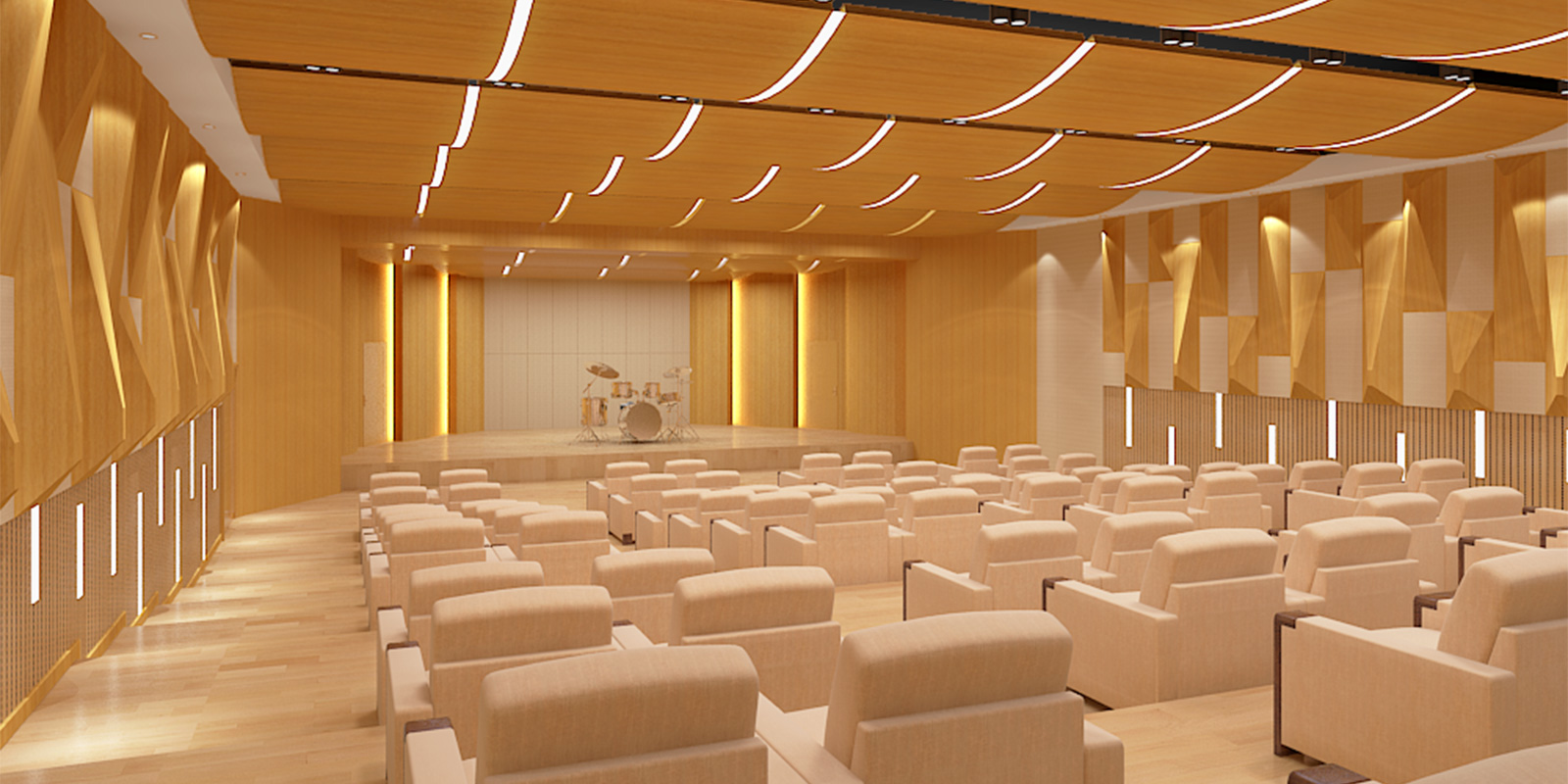
In this scheme, the building area is about 176.1m², The height is about 3m, and the indoor volume is about 530m³ Take the multi-function hall as an example to explain the architectural acoustic design scheme of the multi-function hall.
The main acoustic requirement in the multi-function hall is to ensure that the language sound is clear. It is necessary to strictly control the full frequency reverberation time (especially the low-frequency reverberation time) in the multi-function hall, and the control of the low-frequency reverberation time is a difficult thing in the acoustic field, which can be replaced by non decorative professionals.
Design requirements: according to the national standard Code for Acoustic Design of Theatre, Cinema and Conference Room Buildings and the proposed acoustic indicators and measures, various parameters are controlled through design calculation, various defects are eliminated, and the quality of acoustic environment inside the space is improved to ensure the normal use of functional rooms. Make the interior decoration design beautiful and practical.
Design objective:
(1) Appropriate reverberation time and reverberation frequency characteristics shall be obtained for indoor space, and the IF reverberation time shall be controlled within 1.0s under full field conditions to achieve good sound quality environment and speech clarity.
(2) Acoustic defects such as silent standing wave, flutter echo and multiple echo.
Reverberation time
The reverberation time T60 refers to the time from the moment when the sound source stops sounding when the indoor sound field reaches steady state to the time when the sound pressure level decays by 60dB. It is one of the most important objective indicators for evaluating room sound quality.
The calculation formula of T60 is:
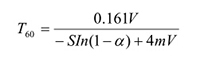
Wherein, average indoor sound absorption coefficient:
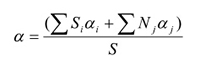
V—Room volume(m³);
S—Total indoor surface area(m²);
α—Average indoor sound absorption coefficient;
m—Sound attenuation coefficient in air;
Si—Surface area of indoor parts(m²);
αi—Sound absorption coefficient corresponding to Si;
Nj—Number of people or objects;
αj—Sound absorption coefficient corresponding to Ni
The reverberation time directly affects the listening effect. If the reverberation time is too long, the hearing clarity will be affected and the sound reinforcement system may howl and the sound transmission gain of the sound reinforcement system will be adversely affected. If the voice is too short, it will become dry, weak and unnatural, which will affect people's normal ability to identify the voice. Therefore, sound absorbing materials should be arranged reasonably to make the frequency characteristic curve basically straight, so as to achieve a proper reverberation time.
Background noise(RN)
The environmental noise mainly includes the environmental noise outside the building and the environmental noise inside the building.
The environmental noise outside the building includes: traffic and transportation noise, factory noise, construction noise, commercial noise, social life noise, etc.
The environmental noise inside the building includes: the noise of people flow in the pump room, air conditioning machine room, elevator room and other equipment rooms, lobby and corridor, and the floor impact sound generated by the activities of upper personnel.
No low frequency resonance, acoustic staining and other sound quality defects
The flutter echo is a series of closely followed reflected pulses caused by the same original pulse sound. Flutter echo is very easy to occur between parallel planes.
Acoustic focusing means that the sound is focused to one place after being reflected by the concave arc surface, resulting in uneven distribution of sound field. Concave arc wall is very easy to produce acoustic focusing phenomenon.
In order to improve the listening effect of the conference room, it is required not only to control the reverberation time in the hall, but also to eliminate acoustic defects such as sound focusing and flutter echo, so as to make the voice clear and the sound field even in the hall.
(1) 《Building sound insulation and absorption structure》(National Building Standard Design Atlas 08J931);
(2) 《Code for fire protection design of interior decoration of buildings》(GB50222-95);
(3) 《Code for indoor environmental pollution control of civil construction engineering》GB50325-2001;
(4) 《Acoustic environment quality standard》GB3096-2008;
(5) 《Specification for reverberation time measurement in auditorium》GBJ76-84;
(6) 《Code for acoustical design of theaters, cinemas and multipurpose halls》GB/T50356-2005;
(7) Party A's requirements and relevant architectural and decorative drawings
(1) The multi-function hall has a volume of 528m³, It is very easy to produce echo and multiple echoes, which make people hear turbid.
(2) The length is 17.5m, and the free sound path is too large, which is easy to generate echo.
(3) The place is rectangular, and there are parallel walls, which are prone to produce vibrating echoes.
(4) The ceiling of the site is parallel to the floor tile, which is easy to form multiple reflections. The above phenomena will cause sound defects in the place and affect the listening effect of the audience. Acoustic materials must be installed reasonably to improve and eliminate acoustic defects.
The main functional requirements of the multi-function hall are as follows: mainly meetings; In order to improve the uniformity of indoor sound field, ensure the clarity of indoor language, and eliminate the acoustic defects such as indoor echo, multiple echo, flutter echo, etc., sound absorbing materials with strong sound absorption will be selected to control the short reverberation time.
In order to reasonably control the reverberation time in the multi-function hall, maintain the design effect of the current decoration, eliminate the inherent acoustic defects of the building and improve the uniformity of the conference sound field, various acoustic decorative materials should be comprehensively arranged in the multi-function hall, and the shape, specification, installation angle and installation method of these materials should be strictly controlled.
It is recommended to install 90mm Class E sound-absorbing board on the wall, with the installation height of 3m. The vibration echo and multiple echoes of the parallel wall are eliminated through the sound absorption of the wall。
(1) The decoration is beautiful and generous, and the visual feeling is comfortable and good.
(2) The sound-absorbing materials have no dust pollution of glass fiber particles and no formaldehyde pollution, and meet the environmental requirements for air quality in the site.
(3) Good voice. That is, the low, medium and high tones are moderately balanced.
(4) Sound quality defects such as clear hearing and silent staining in the place.
(5) After the project is implemented, the acoustic environment and on-site environment are suitable, meeting the full site reverberation time index and meeting the national standard.
(1) Finished product - for multi-function hall.
(2) Structure: sound-absorbing cotton is embedded in the installation keel, and the wood stone slot plate is decorated.
(3) The thickness of wooden slot orifice plate is 15mm, the slot width is 3mm, the slot edge distance is 13mm, and the perforation rate is about 11%.
(4) The release amount of glass fiber particles released in 24 hours is 0.01mg/m³, Superior to the national standard limit of 0.15mg/m ³ Indicators of.
(5) Requirements for sound absorption coefficient of products are as follows:
| Measuring conditions | Center frequency / Hz | 125 | 250 | 500 | 1000 | 2000 | 4000 |
| 5cm installation of rear cavity | Sound absorption coefficient α | 0.64 | 0.81 | 0.91 | 0.92 | 0.72 | 0.68 |
Note: The test report of the national authority shall be provided for environmental protection performance and sound absorption coefficient.
(1) Acoustic calculation uses years of mature experience and calculation software for calculation;
(2) The noise in the place has been improved to a certain extent;
(3) Acoustic materials are beautiful and plastic;
(4) No glass fiber dust and formaldehyde pollution, meeting environmental requirements;
(5) The wall sound absorbing material has good impact resistance and antifouling performance.
The measures to ensure that the designed sound absorption effect meets the design standards are:
(1) This scheme is based on the simulation, analysis and calculation of specific acoustic materials. The design effect can only be achieved by strictly following the acoustic parameters of the acoustic materials on which the design is based. If a new architectural acoustic material is replaced, it can only be used after being identified by the architectural acoustic engineer;
(2) The construction quality shall be strict and accurate. During the construction, the construction must be carried out according to the acoustic material parameters confirmed in the design. If there is any change, the acoustic engineer shall be informed, and it can be replaced after accounting and confirmation.

 Contact
400-1593-886
Room 506, Huachang Center, Nanhai District, Foshan City, Guangdong Province
Scan the code and follow the WeChat public account

Add WeChat customer service