Publisher: Guangzhou Chuangya Acoustics Technology Co., Ltd. Time: 9/12/2022 12:00:52 PM
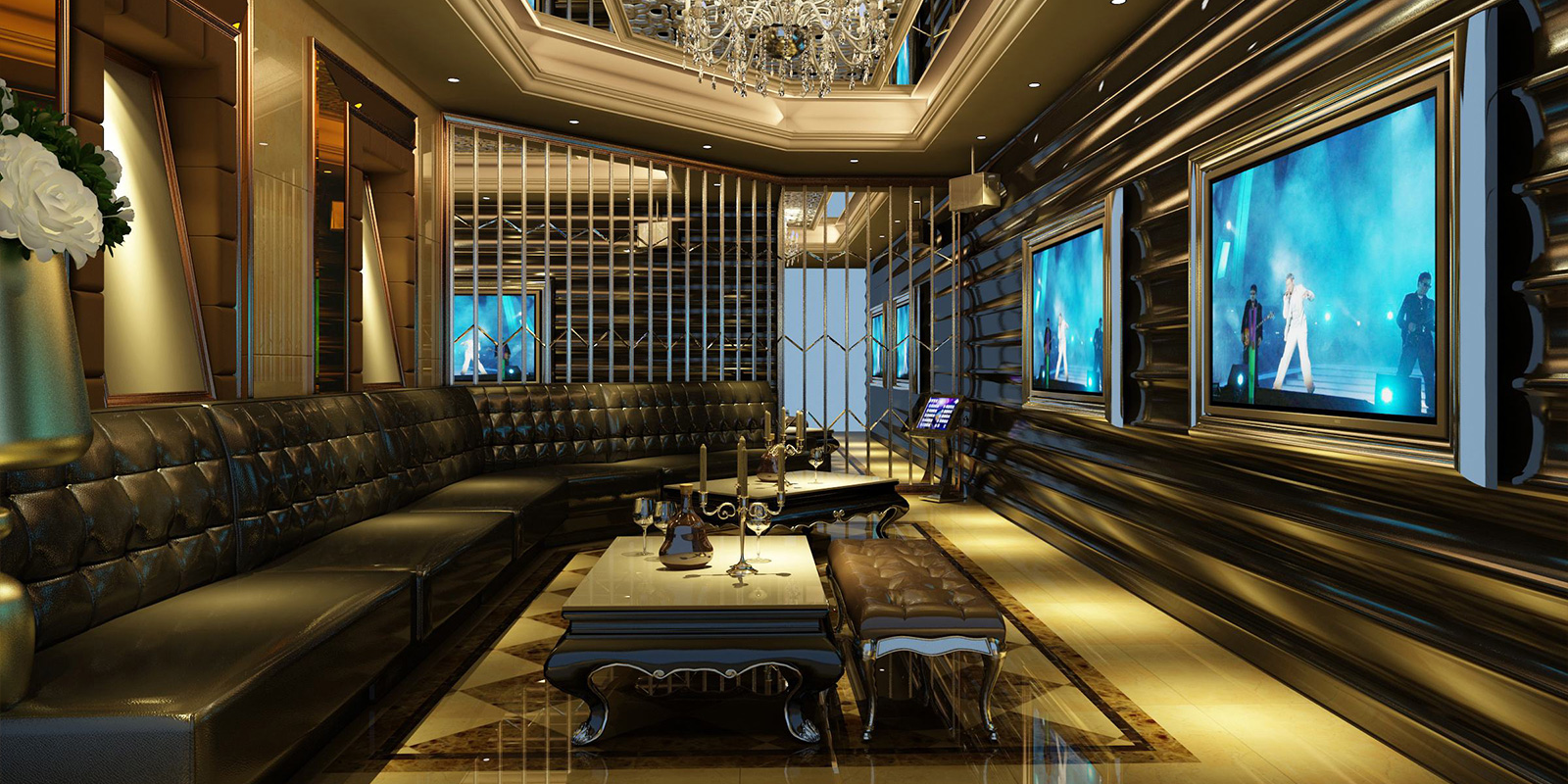
KTV site classification
A. Volume format KTV
Friend gathering, family reunion, classmate party, birthday celebration. Popularization of consumption.
B. High level entertainment club
Luxury decoration, suitable for business entertainment, and pay attention to privacy. High consumption.
C. Nightclub
The design area of small rooms is 8-11 square meters, that of medium rooms is 15-18 square meters, that of large rooms is 24-30 square meters, and that of extra large rooms is more than 55 square meters.
China is the country with the largest number of karaoke in the world, and its decoration styles are different, but the acoustic effect is generally poor. Even though the interior decoration of KTV is more luxurious and the sound system is more advanced, when people go to sing, they will find it difficult to sing, or the phenomenon of acoustic staining. In some places, the crosstalk is serious, and some KTVs are unable to operate normally due to continuous complaints about the noise emissions affecting the normal life of nearby residents. In order to ensure the normal operation of KTV, the acoustic effect of KTV can not only rely on high-end sound systems, but also is impractical. It is also necessary to create an excellent acoustic environment for good sound systems, so that the sound level can be brought into full play. This requires architectural acoustic design, and always penetrates into the decoration of KTV.
1、《Standard for evaluation of building sound insulation》GB/50121-2005
2、《Code for design of sound insulation of civil buildings》GB 50118-2010
3、《Noise emission standard for social living environment》GB 22337-2008
4、《Acoustic environment quality standard》GB 3096-2008
5、《Building sound insulation and absorption structure》(National Building Standard Design Atlas 08J931)
6、《Specification for reverberation time measurement in auditorium》GBJ76-84
7、《Code for indoor environmental pollution control of civil construction engineering》GB50325-2001
8、《Code for Fire Protection Design of Buildings》GBJ16-1987(2001)
9、《Code for fire protection design of interior decoration of buildings》(GB50222-95)
Sound quality problems
(1)The reception room and waiting room have large capacity. Without any architectural acoustic decoration, the reverberation time is too long, the hearing is muddy, and the clarity is low, which affects the normal conversation between guests and reception personnel.
(2)The size of the compartment is regular and square, and the room capacity is small, which is easy to produce sound dyeing, resonance, resonance, etc.
(3)The compartment is arc-shaped and concave, which is easy to produce sound focusing.
(4)The reverberation time in the private room is too long, and the equipment itself has defects, which are easy to produce howling. At the same time, too long reverberation time affects the clarity of the singer's listening.
Noise
(1)The sound insulation performance of partition walls between private rooms is poor, and cross talk phenomenon occurs in private rooms.
(2)The ground impact noise is loud, and the KTV emission noise affects the normal life and work of nearby residents.
(3)The noise of equipment, central air conditioning system and ventilation system is too loud.
Reverberation time
The reverberation time T60 refers to the time from the moment when the sound source stops sounding when the indoor sound field reaches steady state to the time when the sound pressure level decays by 60dB. It is one of the most important objective indicators for evaluating room sound quality.
The calculation formula of T60 is:
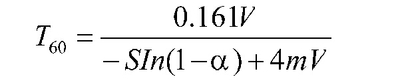
Wherein, average indoor sound absorption coefficient:
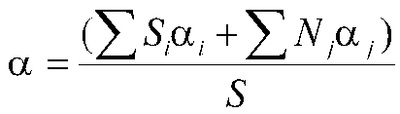
V — Room volume, m³;
S — Total indoor surface area, m²;
α — Average indoor sound absorption coefficient;
m — Sound attenuation coefficient in air(M-1);
Si — Surface area of indoor parts, m²;
αi — Sound absorption coefficient corresponding to Si;
Nj — The number of people or objects, m²;
αj — Sound absorption coefficient corresponding to Ni.
The design area of small rooms is 8-11 square meters, that of medium rooms is 15-18 square meters, that of large rooms is 24-30 square meters, and that of extra large rooms is more than 55 square meters. The volume of the private room is not too large, so the reverberation time is mainly controlled between 0.5-1.0s according to the size of the room.
Solution
1. The wall and ceiling of the reception hall and waiting hall shall be reasonably arranged with sound absorbing materials and suspended ceilings according to the requirements of reverberation time. See CAD drawings for specific specifications, areas and installation methods of acoustic walls and suspended ceilings.
2. The wall and ceiling in the compartment shall be reasonably arranged with sound absorbing materials according to the calculated reverberation time. The small compartment shall be mainly installed with sound absorbing structures on the back wall and opposite wall of audio equipment and video. Medium, large and extra large compartments shall be reasonably increased in material area according to reverberation time requirements. In order to reduce cost, acoustic ceiling can be set. Attention shall be paid to avoid making it into a "cavity" structure.
3. The placement position of furniture and other decoration design should be considered to be conducive to the diffusion of sound field. For example, the distance between sound equipment and singers should be far, which is conducive to the diffusion of sound field.
4. The deviation of sound field sound pressure level test value at each point in the compartment is less than 2dB.
5. Set up an independent bar or private area in the sound and video area to avoid the impact of the sound and video area on other functional areas.
1、Indoor noise reduction:

Where: △Lp - sound absorption and noise reduction in the room (dB);
Q — Directivity factor;
R1 — Room constant before treatment;
R2 — Room constant after treatment;
r — Distance from receiving point to sound source。
2、Sound insulation mass law:
R=20lgm+20lgf-48
Where: R - sound insulation(dB);
m — Surface density of materials(kg/m²);
f — Frequency of incident sound wave(Hz);
《General rules for design of civil buildings》JGJ37-87. It is required that the weighted sound insulation Rw of partition walls of various main rooms shall not be less than 40dB.
《Code for design of sound insulation of civil buildings》GB 50118-2010
| Allowable indoor noise level | ||
| Room name | Allowable noise level (A sound level)(dB) | |
| High requirement standard | Low standard requirements | |
| Shopping malls, stores, shopping centers, exhibition centers | ≤50 | ≤60 |
| Restaurant | ≤45 | ≤55 |
| Staff lounge | ≤40 | ≤45 |
| Corridor | ≤50 | ≤60 |
| 《Noise emission standard for social living environment》 GB22337-2008 | ||
| Environmental function category | Night dB(A) | Daytime dB(A) |
| 0 | 50 | 40 |
| 1 | 55 | 45 |
| 2 | 60 | 50 |
| 3 | 65 | 55 |
| 4 | 70 | 55 |
General rules for design of civil buildings Emission standard for noise of social living environment
The Class 0 functional area is applicable to special residential areas, such as senior residential areas, sanatoriums, etc.
The Class 1 functional area is applicable to the areas dominated by residential, cultural and educational institutions.
The Class 2 functional area is applicable to residential, commercial, industrial mixed area and commercial center area.
The Class 3 functional areas are applicable to industrial areas.
The Class 4 functional areas are applicable to areas on both sides of trunk roads.
Solution
(1)Wall sound insulation: sound insulation shall be provided between the hall and the private rooms, and between the private rooms. First, 2/4 of the red brick walls are economical and practical, and the partition walls must be built to the top. Second, the sound insulation walls are made of light steel keel gypsum boards or sound insulation and fire protection boards.
(2)The wall shall be perforated when it needs to go through the ventilation pipe or other lines, and the lines shall be sealed to avoid crosstalk.
(3)Ground sound insulation: the air noise in the room will spread to the downstairs and the structure through vibration, which can be solved by leveling the ground, spreading sound insulation materials and installing the floor.
(4)Sound insulation of ceiling: on the basis of the original floor slab, a light steel keel ceiling is made. A cavity is formed outside and filled with sound absorbing materials. Under the sound absorbing materials, a layer of light ceiling is made of double-layer gypsum board.
(5)Select low frequency exhaust and air conditioning systems, power amplifiers with low impedance damping coefficient, microphones and sound systems. Reduce background noise.
(6)Select low frequency exhaust and air conditioning systems, power amplifiers with low impedance damping coefficient, microphones and sound systems. Reduce background noise.
(7)Other power distribution rooms, machine rooms, cooling towers and other structures must be well treated for sound insulation and vibration reduction.
(8)The doors and windows connecting with the outside world must be sound insulated and sealed without gaps.
Material requirements
1、The ceiling materials of halls and private rooms shall be Class A decoration materials, and the wall and floor materials shall not be lower than Class B1.
2、The ceiling materials in the evacuation passage and corridor shall be Grade A decoration materials, and the wall and floor materials shall not be lower than Grade B1.
3、The keel materials used for the ceiling and wall decoration of the hall and the private room shall be Grade A.
4、The fire endurance of partition wall shall not be less than 2.0h, and that of floor slab shall not be less than 1.5h.
5、The number of evacuation doors shall be determined by calculation and shall not be less than 2. It shall not be less than 0.90m. Class A fireproof door shall be adopted.
6、No glass fiber dust pollution, meeting environmental requirements. Formaldehyde emission shall reach the standard above E1 level.

 Contact
400-1593-886
Room 506, Huachang Center, Nanhai District, Foshan City, Guangdong Province
Scan the code and follow the WeChat public account

Add WeChat customer service